 Work for IRD
 Contact us


Overview
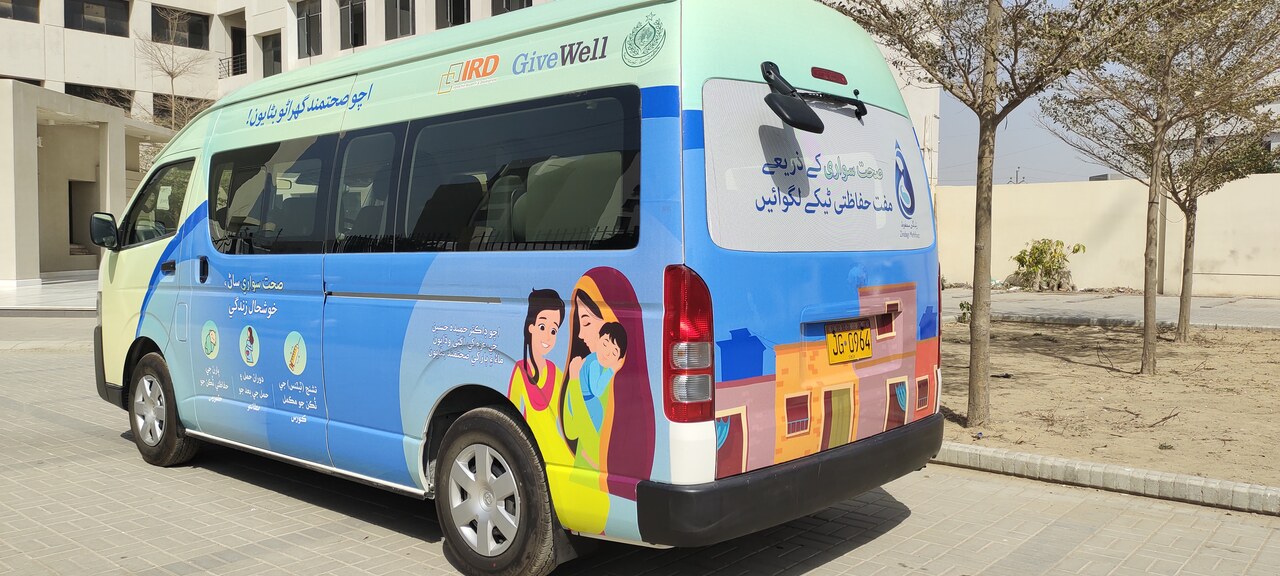
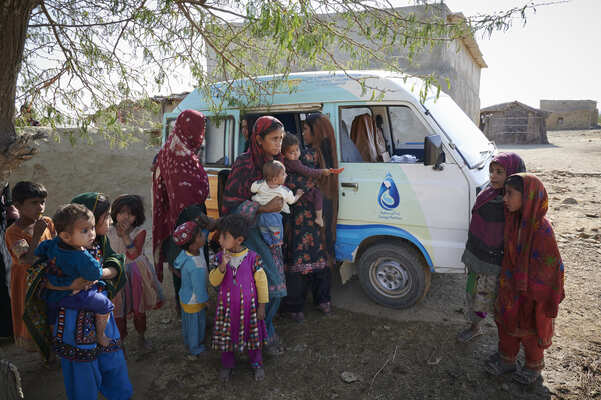
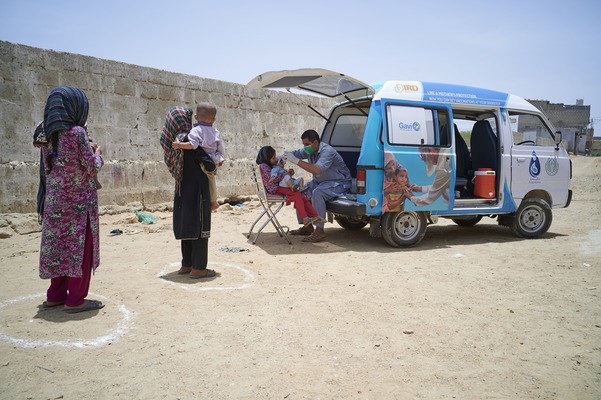
The Mobile Immunization Vans (MIVs) program is a government-led initiative designed to deliver routine immunization services directly to underserved and hard-to-reach communities across Sindh, Pakistan. In partnership with EPI Sindh, IRD mobilizes equipped vaccination vans and trained staff to bring vaccines to the doorstep of families who face geographic, financial, and cultural barriers to accessing fixed immunization centers. All immunization data is recorded in the Sindh Electronic Immunization Registry (ZM-EIR), contributing to stronger tracking and coverage monitoring across the province. The Mobile Immunization Vans program is active in super high-risk Union Councils of Karachi and other underserved districts in Sindh, operating across multiple towns and informal settlements.
Impact Data

232,533
children under 2 vaccinated

18,419
women immunized
Our Partners
- Expanded Programme on Immunization (EPI)
- Health Department Sindh
The Need
The Need
Low coverage and inequity
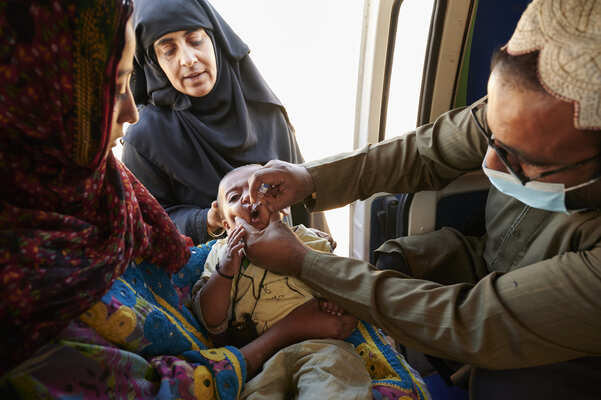
Only 66% of children in Pakistan are fully immunized, dropping to 49% in Sindh. Children living in informal settlements, remote villages and urban slums are the least likely to be vaccinated.
Access barriers
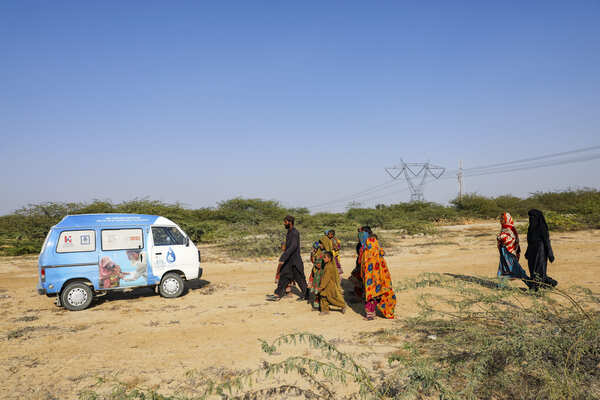
Remote locations, distant health facilities, unaffordable transport, and reliance on male family members for mobility delay or prevent caregivers from seeking vaccination.
Disease risk
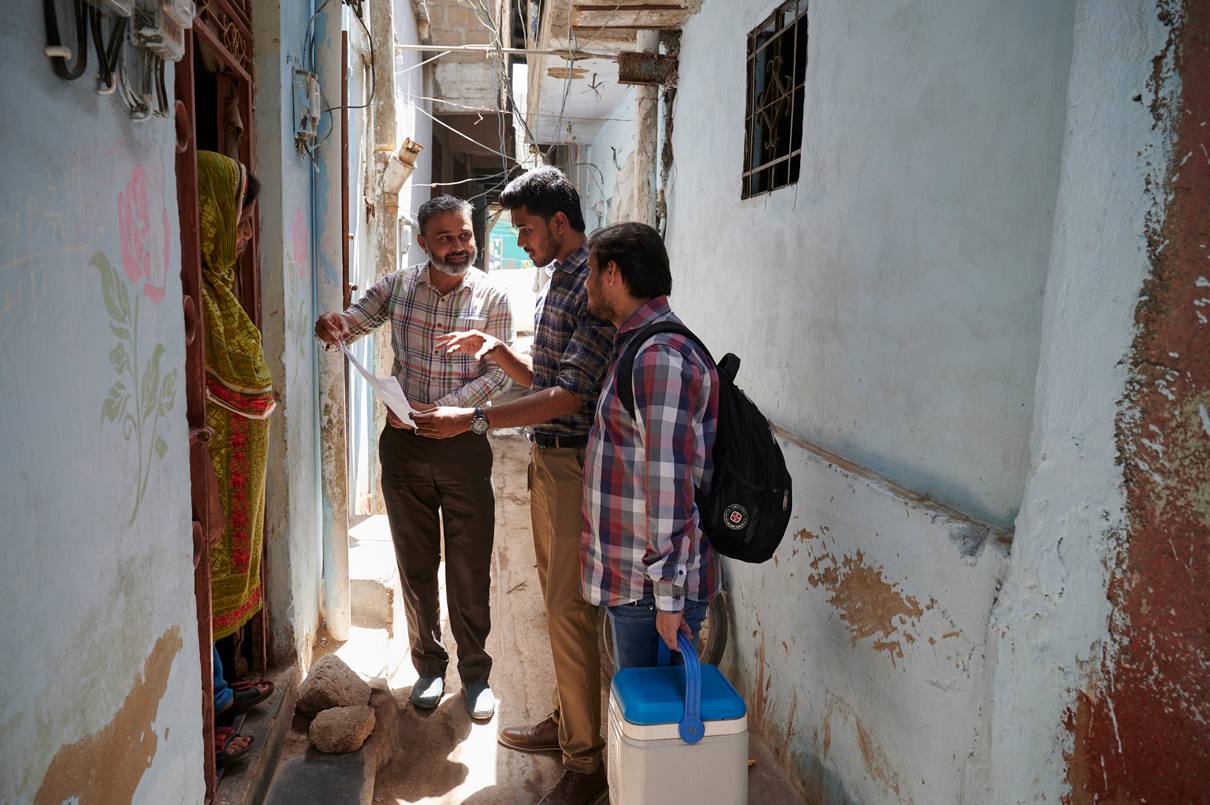
These access gaps contribute to persistent outbreaks of vaccine-preventable diseases such as measles and polio. Extending vaccine delivery beyond static centers is essential to achieve equitable, universal immunization.
Our approach: Delivery
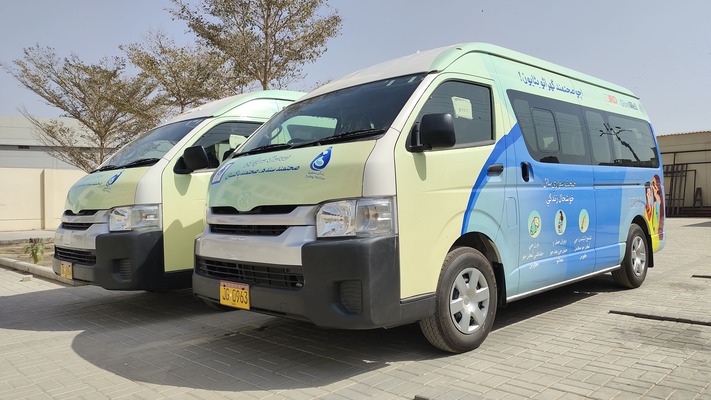
IRD, in collaboration with EPI Sindh, launched the Mobile Immunization Vans project in April 2019 to extend routine vaccination services directly into high-risk areas.
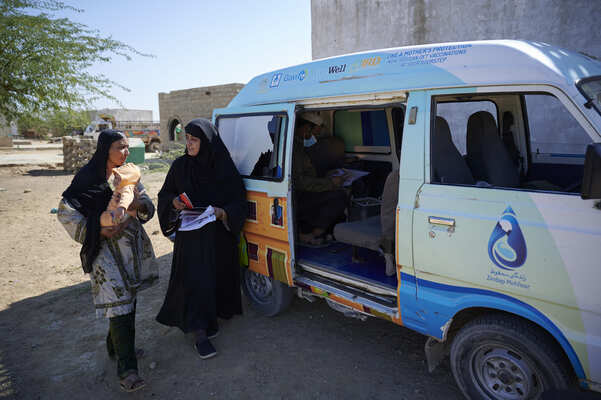
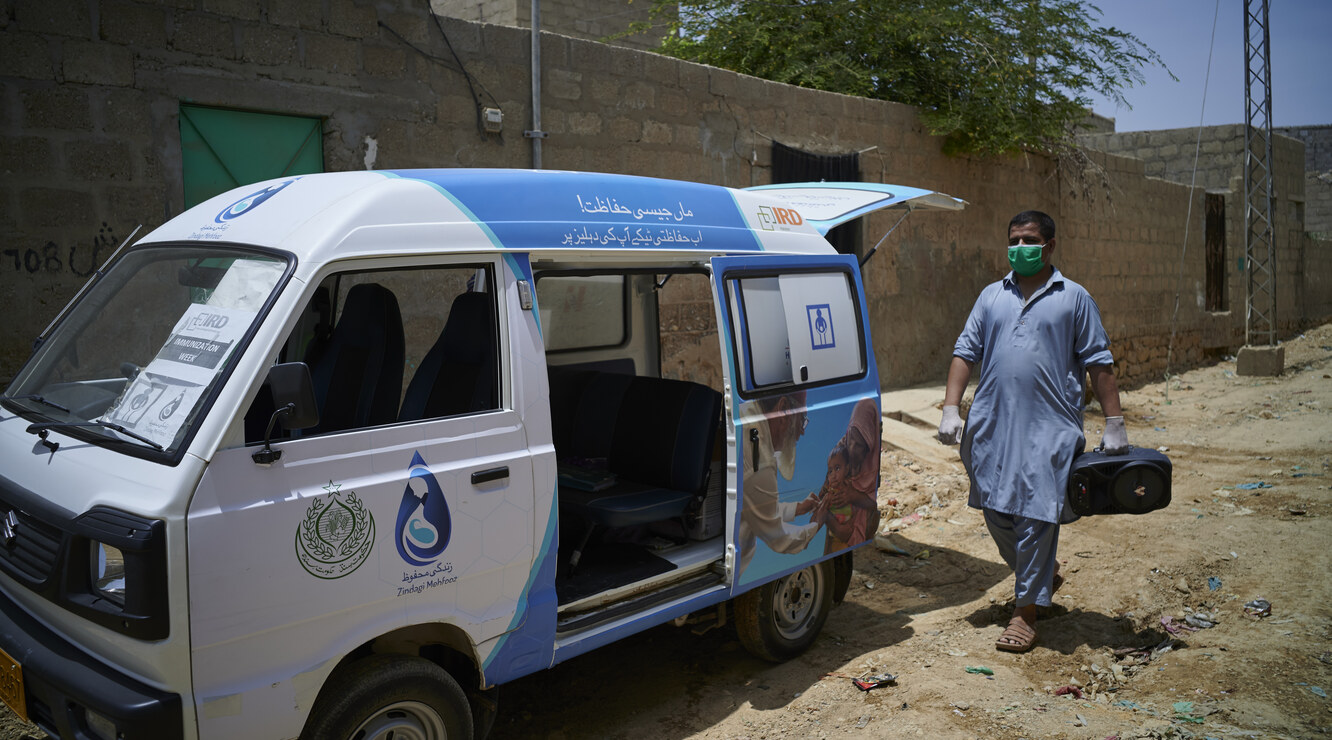
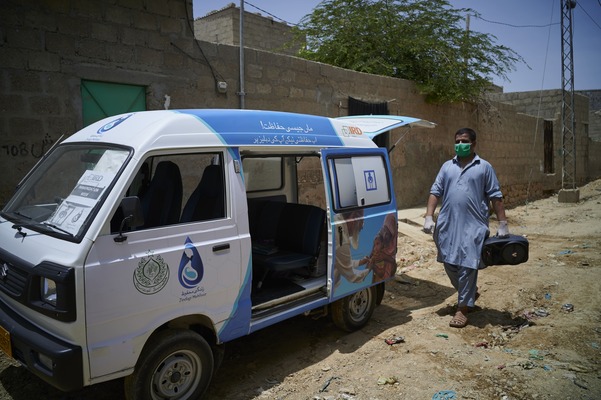
- Mobile service delivery: Nine fully equipped vans (five in Karachi, four across other Sindh divisions) travel to central, accessible locations within underserved communities.
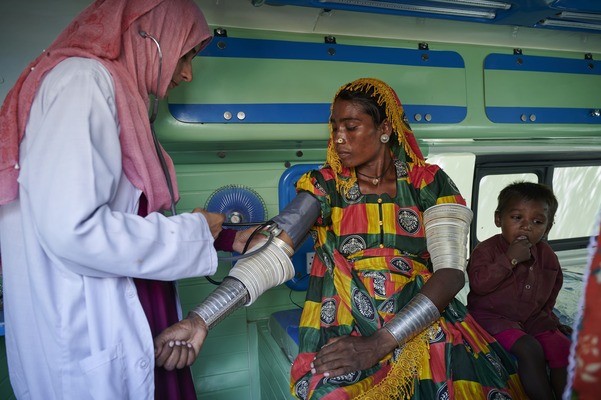
- Government-led, IRD-supported: EPI vaccinators deliver services while IRD supports route planning, logistics, community engagement, data entry and supervision.
- Integrated digital records: Every child vaccinated is registered in the Zindagi Mehfooz Electronic Immunization Registry (ZM-EIR), enabling follow-up reminders and accurate monitoring of coverage and defaulters.
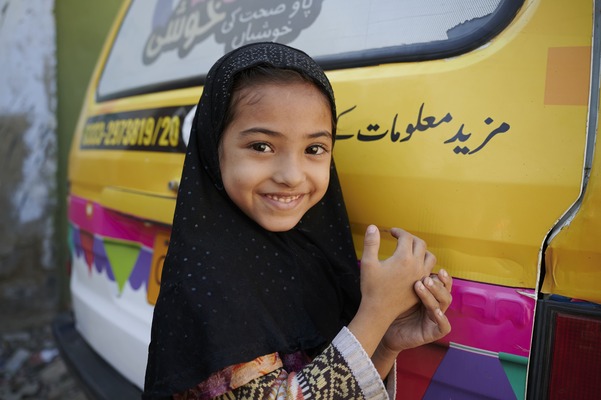
- Gender-sensitive accessibility: Services are available within neighborhood boundaries, enabling mothers to vaccinate children without needing male escorts or long travel.
Our Reach
- Active in super high-risk Union Councils of Karachi and other underserved districts in Sindh
- Operational across multiple towns and informal settlements
The Drivers Behind Our Impact
The Drivers Behind Our Impact
Equity-focused delivery
Brings vaccines directly to marginalized communities, overcoming distance, cost and mobility barriers.
Aligned with national systems
Operated through EPI Sindh using government vaccinators and recorded in the national immunization registry (ZM-EIR).
Community-centered planning
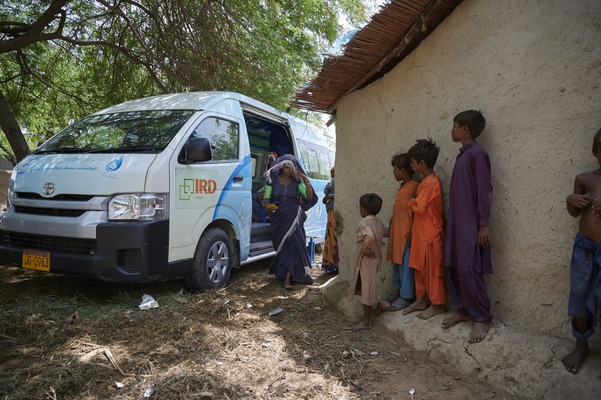
Routes and stops are selected in consultation with local leaders to ensure maximum access and trust.
Data-enabled follow-up
Real-time data entry supports tracking of missed doses and targeted follow-up with caregivers.
Scalable and replicable
The model can be expanded to remote rural districts and adapted for reaching zero-dose children across provinces.
Replicable model
The combination of evidence-based targeting, strong government ownership and adaptable delivery makes PDI a model for other countries seeking to scale deworming programmes.