 Work for IRD
 Contact us



Overview
The Maternal Mental Health, Health Expectations and the Demand for Childhood Immunizations project explores the intersection of mental health, decision-making, and child health outcomes in Pakistan. It investigates how psychological first aid (PFA) and information-based interventions delivered to parents—particularly mothers—can influence childhood immunization behaviors.
Using a randomized controlled trial (RCT) design, the study tests whether psychosocial support provided by trained community mental health workers can enhance parental wellbeing, change health-related beliefs, and ultimately improve the uptake and timeliness of childhood vaccinations. By addressing both the cognitive and emotional dimensions of immunization decisions, this program contributes evidence toward designing holistic and sustainable public health strategies for low-resource settings. The project was implemented across rural Khyber Pakhtunkhwa (KP), Pakistan, focusing on families with infants under one month old in regions where vaccination rates remain lowest and access to mental health care is limited.

1,800
mothers engaged across rural KP

1,191
calls completed through the RCT

1,622
calls allocated through the RCT

73%
of allocated calls were completed
Our Partners
- American University of Sharjah (AUS): Primary funder and grant administrator
- Interactive Research and Development (IRD) Pakistan: Lead implementing organization, responsible for design, ethics, intervention delivery, and analysis
- Gallup Pakistan: Partner for recruitment, data collection, and field logistics
- University of Michigan and ESRC Research Centre on Micro-Social Change (MiSoC), University of Essex: Co-investigators providing additional research funding, expertise, and data analysis support
The Need
The Need

Pakistan continues to face low immunization coverage
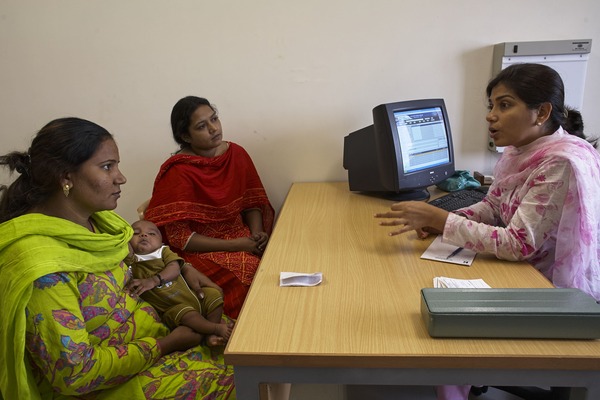
Pakistan continues to face low immunization coverage, with disparities driven by limited access to healthcare, low education, and socioeconomic challenges. While supply-side barriers remain important, demand-side factors—such as caregiver awareness, mental health, and decision-making power—play a critical role in determining vaccination uptake.
The program addresses
The program addresses this gap by integrating psychosocial support and immunization education for mothers, recognizing that maternal wellbeing, knowledge, and family dynamics together influence health-seeking behavior.

Our Approach
The study employed a Randomized Controlled Trial (RCT) in rural Khyber Pakhtunkhwa (KP) with 1800 mothers to test the effect of psychological support on immunization outcomes.
A complementary RCT engaged 1800 mothers of infants under one month, divided into three groups:
- Control group
- PFA intervention only
- PFA + immunization information intervention
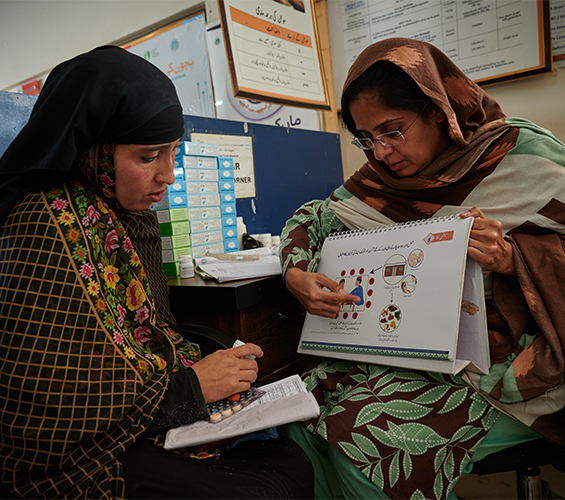
Mothers received structured phone-based sessions combining basic psychological support and practical information on immunization benefits, risks of vaccine-preventable diseases, and religious perspectives.
Evaluation:
Baseline and endline surveys measured:
- Immunization rates and on-time vaccination
- maternal depression (PHQ-9)
- Knowledge, expectations, and attitudes toward immunization
- At the end of the study, another survey aimed to assess the sustained impact on immunisation rates, maternal knowledge, attitudes, and overall life satisfaction

Impact
- Total participants: 1,800 mothers engaged across rural KP
- RCT progress: 1,622 calls allocated, 1,191 completed (73%), 223 lost to follow-up (14%)
- Outcomes:
-
- Psychological first aid significantly improved vaccination behavior.
- Added informational components had modest but positive effects on knowledge and beliefs.
- Participants showed reduced depressive symptoms and increased confidence in child health decisions.
-
These findings reveal that even light-touch psychosocial interventions can substantially improve immunization coverage when integrated with existing public health systems.
Our partners
PDI has a nationwide footprint, focusing on districts identified by the national STH survey— 47 at-risk districts requiring annual deworming.
The Drivers Behind Our Impact
The Drivers Behind Our Impact

Evidence-Based Design
Rigorous randomized control methodology ensuring reliable, actionable results.

Accessible Interventions
Remote delivery model makes mental health and behavioral support scalable in low-resource contexts.

Policy Relevance
Offers actionable insights for integrating mental health services within immunization programs at national scale.